
When homeowners think about a roof, they think about what they can see: the shingles, the color, maybe the gutters. Almost nobody thinks about the empty space underneath. But that attic, and whether it can breathe, has a huge amount to say about how long your roof lasts and how comfortable your home stays through a Redding summer.
The simple idea behind attic ventilation
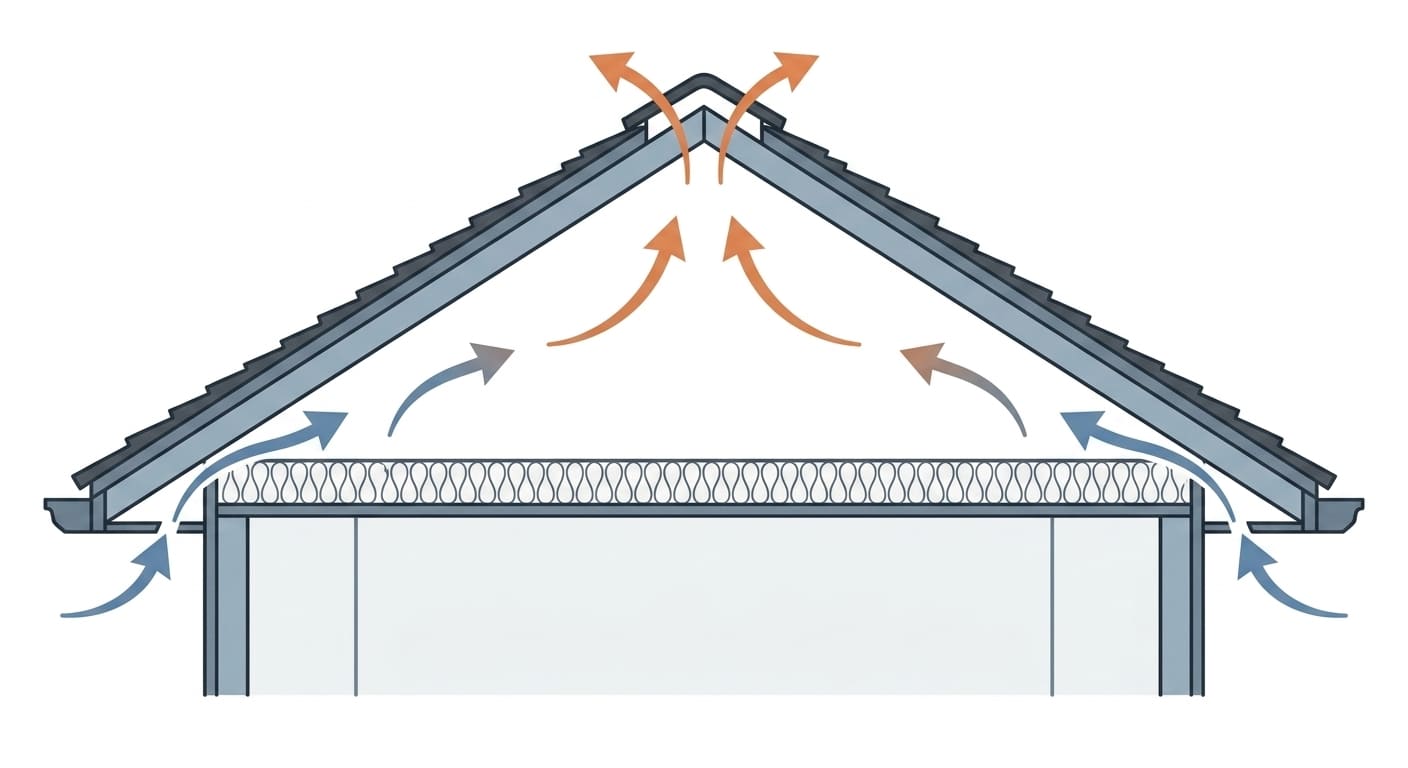
At its core, attic ventilation is just moving outside air through the attic so heat and moisture don't build up and sit there. The model roofers use is "low in, high out": cooler air enters low on the roofline, warms as it rises through the attic, and exits high near the peak.
That flow depends on two kinds of vents working together:
Intake vents sit low, usually under the eaves in the soffits, and let fresh outside air in. Continuous soffit vents (long perforated strips running along the eaves) are generally considered the best intake because they spread airflow evenly across the whole attic.
Exhaust vents sit high, ideally right at or near the ridge, and let the hottest, most moisture-laden air escape. A ridge vent that runs the length of the peak is considered the gold standard for exhaust, because it offers the most vent area at the highest point of the roof.
The key word is balance. Industry guidance is that roughly half the vent area should be low (intake) and half high (exhaust), and if the two aren't balanced, your effective ventilation is limited to whichever is smaller.
Why one without the other doesn't work
This is the mistake we see most often. A homeowner or a previous contractor adds a nice continuous ridge vent, but the house has no soffit or eave vents to feed it. With no way for fresh air to get in, that ridge vent is basically useless: there's nothing to replace the air it's trying to push out.
Think of it like a straw: an exhaust vent can only pull air out if intake is letting an equal amount in. When intake is weak or blocked, even a roof covered in exhaust vents will struggle, because the system is starved for replacement air. And intake is very often the weak link, because soffit vents get blocked by attic insulation packed tight at the eaves, or painted over, or clogged with debris.
Why this matters more in Redding
In a hot climate, ventilation isn't a nice-to-have: it's protecting your roof from two directions at once.
In summer, a poorly vented attic traps the heat radiating down off sun-baked shingles. The Asphalt Roofing Manufacturers Association notes that a poorly ventilated attic can reach 140°F on a day that's only 90°F outside. All that trapped heat cooks the underlayment and shingles from below and shortens their life. It also makes your house hotter and your air conditioner work harder.
In winter (and Redding does get cold, with December lows dipping to around 25°F and occasional frost), the same ventilation manages moisture. Everyday activities like showering and cooking push moisture up into the attic, and without airflow it condenses, leading to rot and mold on the roof deck and rafters. A balanced system carries that moisture out before it can cause damage.
The payoff is real: proper balanced ventilation can extend a roof's lifespan by an estimated 5 to 10 years by reducing thermal stress and preventing moisture buildup.
What to look for
You don't need to become a ventilation expert, but a few things are worth knowing:
- If your roof has ridge or roof vents up top but no visible vents under the eaves, that's a red flag worth asking about.
- If your attic feels like a furnace in summer or you see signs of moisture, staining, or mold on the underside of the roof, ventilation may be part of the problem.
- Any time you're getting a new roof, ventilation should be part of the conversation: a re-roof is the natural moment to correct a system that was never balanced in the first place.
The takeaway
You can install the finest shingles made and still lose years off the roof if the attic beneath them can't breathe. Ventilation is quiet, invisible, and easy to overlook, which is exactly why it gets skipped, and why doing it right is part of building a roof that actually lasts in this climate.
If you're not sure whether your home's ventilation is doing its job, we're glad to take a look as part of a free estimate and tell you honestly what we find.
This article is for general educational purposes. Ventilation requirements vary by home and local building code. For advice specific to your property, contact a licensed roofing contractor.